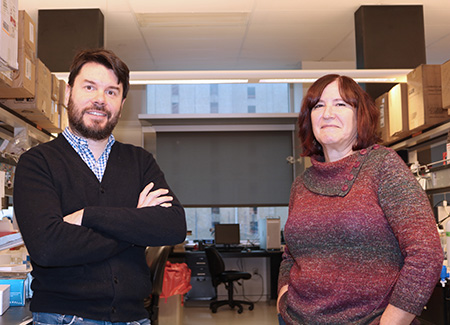
Scientists at Rutgers University-Newark have discovered that when a key protein needed to generate new brain cells during prenatal and early childhood development is missing, part of the brain goes haywire – causing an imbalance in its circuitry that can lead to long-term cognitive and movement behaviors characteristic of autism spectrum disorder. To read the full article.
Recent Posts
- Professor’s Research into Human Genetics Points to New Ways of Treating a Painful Gastrointestinal Disease.
- Modernizing Health Records for the Most Vulnerable.
- For Rutgers Health’s First Chancellor, Mentoring Was the Mission.
- Inspired by a Family’s Struggle, a Scientist Helps Uncover Defense Against Alzheimer’s Disease.
- Researchers Track How Housing Hardships During Childhood Influences Housing Insecurity in Young Adults.
Categories
- Community (2,418)
- Covid (994)
- CTO Events (6)
- News (3,060)
- Pilots (21)